


Why does the best idea sometimes come when you leave your desk?

By Cowork Zagreb Editorial Team · Updated 2026-10-01
Sometimes it is difficult to find a solution to a problem precisely when we are paying the most attention to it. We stare at the same screen for hours, try to find a new idea, and return to the same thoughts, but without any concrete result. In such moments, the solution may not be to concentrate even more, but to briefly change what surrounds us.
Changing the work environment can break the routine, introduce new stimuli into the workday, and allow for a different perspective on the task. This does not mean that every problem will disappear as soon as we leave our desk, but a short change of space, a walk, or working from a different environment can help when we get stuck on a particular task.
For freelancers, entrepreneurs, and people who work remotely, this can be especially useful because the workday does not always have to look the same. Instead of working in one place for several hours, we can adapt different spaces and activities to the type of task, level of concentration, and the way we work best.
Why can working in the same place become monotonous?
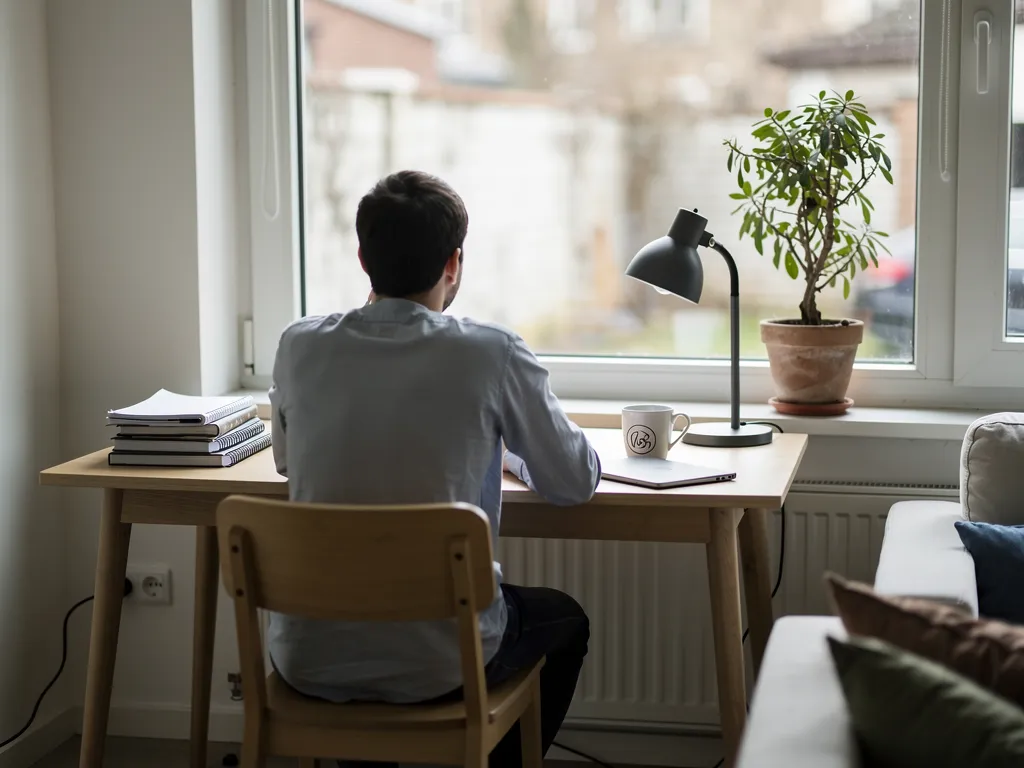
The desk is an important part of the daily routine. Precisely because we use it every day, it is easy to stop noticing how much time we spend in the same place. The same screen, the same chair, the same lighting, and the same view can become a usual part of the workday.
That in itself is not a problem. A stable work environment helps many people maintain concentration. However, when we are working on a creative task, looking for a solution to a problem, or trying to come up with something new, a long-lasting routine can sometimes make it harder to change perspective.
This is especially noticeable when working from home. When the same space is at the same time an office, a place to rest, and a space for private life, the boundary between different parts of the day can become less clear. Separating the workspace from the space for rest can therefore help create a clearer work routine and make it easier to switch between the professional and private parts of the day.
Therefore, a change does not have to mean a major change. Sometimes it is enough to:
- move to another desk
- go for a short walk
- work from a different space for a while
- hold a meeting outside your usual workplace
- change the task you are currently working on
- complete part of the creative process without looking at a screen
The goal is not to constantly change your workplace, but to recognize when your current way of working is no longer helping you.
How can changing your work environment affect creativity?

Creativity is not reserved only for artists and designers. Writing, programming, marketing, business planning, problem-solving, and decision-making also require creative thinking.
When we work on the same task for a long time, it is easy to return to the same patterns of thinking. Changing the environment can help us look at the task from a different perspective and take a step back from an approach that had not been producing results until then.
A new place brings different visual, auditory, and social stimuli. Even a simple change of view can be enough to take a short break from the way of thinking that led us to the problem.
Part of the explanation is also connected to the way the brain processes information during rest. The Default Mode Network (DMN) is the name for a network of brain regions associated with activities such as remembering, daydreaming, thinking about the future, and the free flow of thoughts. Such processes may play a role in connecting different ideas and creative thinking, which is why a new solution sometimes appears precisely after we briefly stop thinking intensively about the problem. Research on creative problem-solving processes also points to the possible role of periods of rest, or so-called incubation, in arriving at a solution later. (Source: Default Mode Network and Creative Thinking
Of course, changing the space alone does not create good ideas. It can only create conditions in which it is easier to take a step back from the routine. That is why it is useful to distinguish changing the environment from simply escaping from work. If we only move our laptop to another desk and continue working without a break, perhaps nothing will change. If we combine a change of space with a short break, a walk, a conversation, or a different approach to the task, it may have greater value.
Why is it sometimes useful to step away from the screen?

Most modern office work takes place in front of a screen. This applies to writing, design, administration, communication, programming, marketing, and many other jobs.
A problem can arise when we try to solve every problem while looking at the same screen. Some ideas are easier to develop when we briefly try to formulate them without a computer. Writing down ideas on paper, taking a short walk, or talking to a colleague can provide a different perspective and help us look at the problem from another angle.
For example, if you have been trying to find a title for a new project for an hour without success, continuing to look at the same document may not be the best approach. A short break can allow you to return to the task with a more rested mind and a different perspective. Therefore, a productive break does not have to be a waste of time. If it allows you to return to the task with a new idea or a clearer direction, it can become a useful part of the work process.
How to incorporate a change of space into the workday?
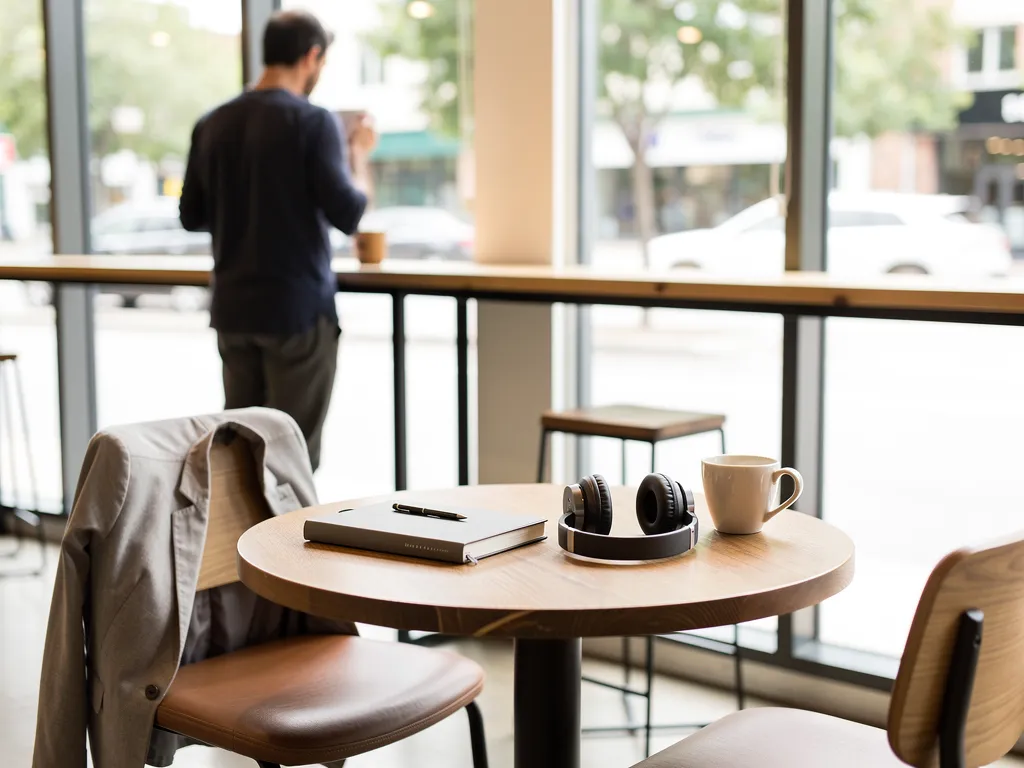
You do not have to look for a new location every day. Instead, you can plan a few moments throughout the day when you will change your activity or work environment.
1. Start the day in a place for focus
For tasks that require concentration, choose a quiet and organized space. Remove unnecessary distractions and complete the most demanding part of the work while you have the most energy.
2. Include short breaks
After several hours of work, do not wait for complete exhaustion to decide for you. Get up, stretch, take a walk, or briefly change your environment.
3. Separate creative tasks from routine ones
Not every task is the same. You can do administrative and repetitive tasks in one environment, while for brainstorming, writing, or planning, you can choose a different space.
4. Make use of conversations with other people
When you have been trying to solve a problem on your own for a long time, another perspective can be useful. A short conversation with a colleague or another professional can sometimes raise a question that you had not considered yourself.
5. Do not turn every change into a distraction
Changing your space only makes sense if it helps you work. If every change means checking your phone, social media, or dealing with unplanned obligations, you have lost the main purpose of the break.
What kind of work environment is good for creative work?

There is no single ideal workspace that suits everyone. What matters depends on the task, your personal way of working, and the time of day.
For focused work, peace and quiet, comfort, a reliable internet connection, and ergonomics are important. Teamwork requires space for conversations, meetings, and collaboration. For creative tasks, some people benefit from more movement and change, while others need complete silence. That is why flexibility can be more important than the appearance of the space itself.
A good workspace allows you to adapt to the task instead of trying to work the same way all day.
Can a coworking space help when you are stuck on an idea?

A coworking space is not just an alternative to working from home. For many freelancers, entrepreneurs, and remote workers, it can be a way to introduce clearer structure into their workday.
Moving from a home to a professional work environment can help separate professional and private activities. At the same time, the presence of other professionals can create a sense of community that is often missing for people who work alone.
In a coworking space, for example, you can spend part of the day at a hot desk, use a quieter space for focused work, and then reserve a meeting room for a meeting or team collaboration. In addition to changing the environment, the presence of other professionals in the same space can create an opportunity to exchange experiences, have conversations, and develop new ideas.
This flexibility is one of the advantages of coworking. You do not have to work the same way all day or use the same space for every task.
At Cowork Zagreb, hot desks, private offices, and meeting rooms with video equipment are available, along with fast internet, printing facilities, and coffee, allowing the space to be adapted to different types of work.
How can you use Zagreb to change your work rhythm?
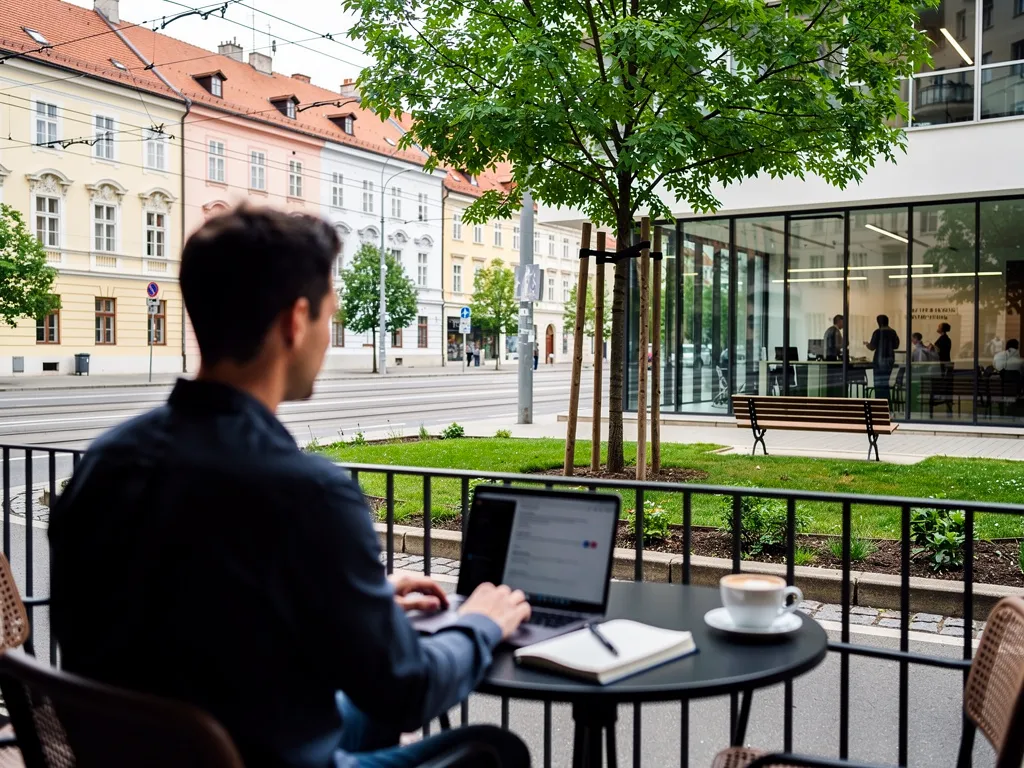
Working in Zagreb opens up additional possibilities: changing your work environment can be combined with a short break from the office or coworking space. A short walk during a break, a meeting at another location, or a few minutes spent away from the screen may be enough to break the monotony of the workday.
For people who work remotely, it is especially useful to have several different places that they can associate with different types of activities. One can be intended for deep focus, another for meetings, and a third for rest. In this way, Zagreb does not become just a place where you work, but also part of your everyday work routine.
When does changing your work environment make the most sense?

You do not have to change your environment every time you lose concentration. Changing your work environment makes the most sense when you can connect a particular problem with the way or place you are currently working.
| Situation | What you can do |
|---|---|
| You have been working on the same task for hours without making progress | Take a short break, change your space, or briefly step away from the screen. |
| You find it difficult to concentrate at home | Try a more professional work environment with fewer distractions and a clearer work routine. |
| You work alone and miss exchanging ideas | Choose an environment where you can be around other professionals and talk to colleagues. |
| You need to work on a creative task | Change your space or way of working so you can look at the task from a different perspective. |
| You have a meeting that requires peace and privacy | Use a space intended for meetings, especially if you need quality communication without interruptions. |
| You are working on routine tasks | A stable workplace with good conditions for concentration may be more than enough. |
In other words, the work environment should adapt to the way you work, not the other way around.
Creativity does not have to start at your desk

Some of the best ideas appear when we are not working directly on the problem. During a walk, a conversation, a short break, or a change of space, we can step away from the way of thinking that had kept us in the same place until then. This does not mean that you should leave your desk every time you are looking for inspiration. A stable workplace and routine still play an important role in productive work.
A more practical approach is to find a balance. Dedicate part of the day to focused work, part to creative tasks, and part to movement, conversations, and changing your perspective.
For freelancers, entrepreneurs, and remote workers in Zagreb, coworking can be one way to introduce this kind of flexibility into everyday work. Sometimes you do not need to work more to come up with a better idea. It is enough to briefly get up, change your environment, and return to the task with a fresh perspective.
Frequently Asked Questions
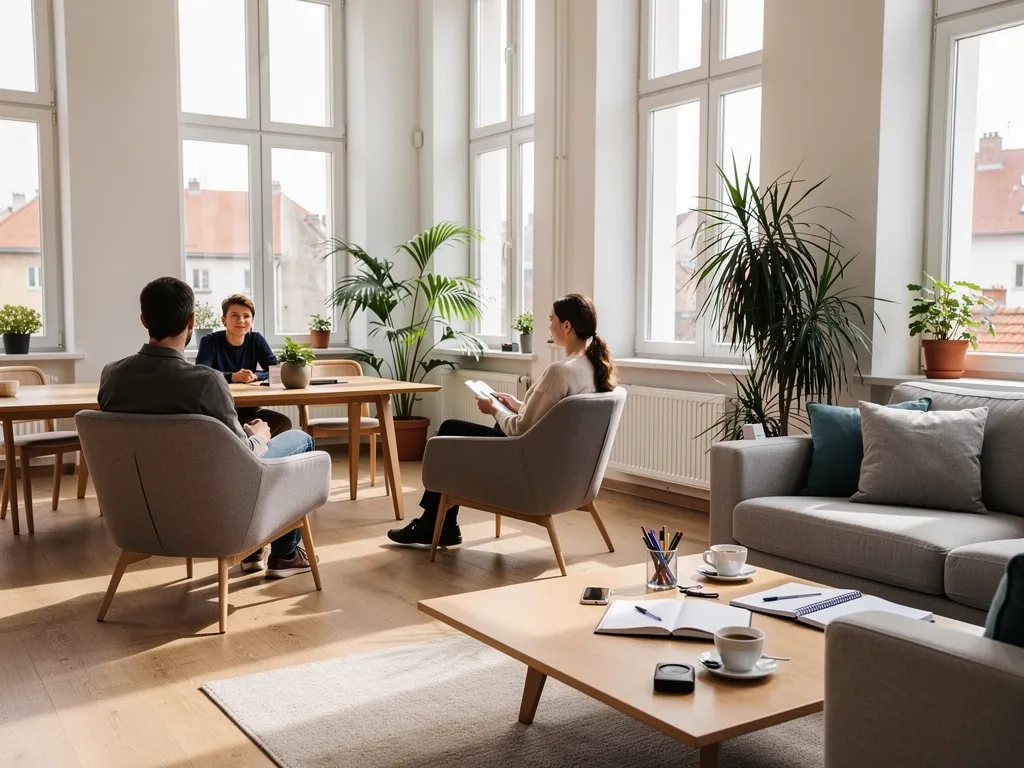
Can changing your work environment help creativity?
Changing your space can break the routine and allow you to look at a task from a different perspective. The change itself is not a guarantee of greater creativity, but it can be a useful way to break up monotony during work and create conditions for a different way of thinking.
How often should you change your work environment?
There is no universal rule. Some people work better with a stable routine, while others benefit from more frequent changes. It is important to observe how different environments affect your concentration and the type of task you are working on.
Is coworking good for creative work?
Coworking can be useful for creative work because it allows you to combine focused work, changing spaces, and contact with other professionals. The benefits depend on the individual’s needs and type of work.
How can a short walk help during the workday?
A short walk can be a way to step away from the screen and the work task. At the same time, it provides a change of space and an opportunity to briefly interrupt your work routine.
Is it better to always work in the same place?
A permanent workplace can help create a routine and maintain focus, but it is not necessarily the best solution for every task. Combining a stable place for focused work with occasional changes of space can provide greater flexibility during the workday.