


How to Start a Small Business in Zagreb Without a Large Budget: A Complete Guide for Entrepreneurs and Startups

Starting your own business is a dream for many people, but it often seems that a lot of capital is required for success. The good news is that today, thanks to digital tools, coworking spaces, and accessible entrepreneurial programs, you can start a small business in Zagreb even with a very limited budget.
An increasing number of young entrepreneurs, freelancers, and startup founders are successfully launching businesses without large initial investments. The key to success is not necessarily large capital, but a good idea, proper planning, and effective use of available resources.
In this guide, you will learn how to start a small business in Zagreb, which business models to choose, how to reduce initial costs, and where to find support, funding, and your first clients.
Why Is Zagreb a Good Place to Start a Business?
Zagreb is the largest economic and entrepreneurial center in Croatia. The city brings together a large number of experts, entrepreneurs, investors, and potential clients.
The advantages of starting a business in Zagreb include:
- a well-developed business infrastructure
- a large number of coworking spaces
- startup incubators and accelerators
- access to domestic and international markets
- a well-developed IT and technology community
- numerous educational programs and networking events
For entrepreneurs who are just starting out, Zagreb offers many opportunities for growth without the need for large initial investments.
Step 1: Find a Business Idea That Solves a Specific Problem

The most successful businesses are created when they solve real user problems.
Before starting a business, ask yourself:
- What problem am I solving?
- Who are my customers?
- Why would someone pay for my solution?
- Is there demand in the market?
A good business idea does not have to be revolutionary. Often, the most successful businesses are those that provide existing services faster, more simply, or better than the competition.
Examples of businesses with low initial investment:
- digital marketing
- web design
- programming
- online education
- virtual assistance
- graphic design
- photography and video production
- e-commerce stores
- business consulting
- social media content creation
Step 2: Conduct Market Research
One of the biggest mistakes beginners make is starting a business without validating the market.
Research:
Competition
Analyze:
- their prices
- services
- customer reviews
- strengths and weaknesses
Target group
Define:
- customer age
- interests
- purchasing habits
- problems they want to solve
Demand
Use:
- Google Trends
- Google Keyword Planner
- Facebook groups
- local business communities
The better you understand the market, the higher your chances of success.
Step 3: Choose the Appropriate Legal Form of Business
In Croatia, entrepreneurs most commonly choose between a sole proprietorship and a limited liability company.
Sole proprietorship
Advantages:
- simpler registration
- lower administrative costs
- simpler bookkeeping
Disadvantages:
the owner is personally liable with their assets
Simple limited liability company (j.d.o.o.)
Advantages:
- low initial capital
- separate liability of the owner
Disadvantages:
- somewhat more administration
Limited liability company (d.o.o.)
The most common choice for startups planning to hire employees and expand their business.
Before making a final decision, it is recommended to consult an accountant or business advisor.
Step 4: Create a Simple Business Plan
You do not need a 50-page document.
It is enough to define:
What are you selling?
Clearly describe your product or service.
Who are the customers?
Define the ideal customer.
How will you make money?
Determine:
- prices
- costs
- expected revenue
How will you find clients?
Plan marketing activities.
A business plan serves as a roadmap during the first year of business.
Step 5: Reduce Costs with Coworking Spaces
Renting a traditional office can be a significant expense.
That is why many startups use coworking spaces, such as Cowork Zagreb.
Advantages include:
- lower costs
- flexible packages
- professional environment
- meeting rooms
- business address
- networking opportunities
For many entrepreneurs, a coworking space represents an ideal compromise between working from home and a traditional office.
Step 6: Take Advantage of Startup Incubators and Entrepreneurial Programs
Many entrepreneurs are not aware that there are organizations that provide free or subsidized support.
Such support includes:
- mentorship
- education
- business consulting
- access to investors
- help with product development
Participation in incubators often accelerates business development and reduces the risk of beginner mistakes.
Step 7: Find Sources of Funding
Not every business needs to be financed through a loan.
Available options include:
Personal funds
The simplest form of financing.
EU funds
Many programs support:
- digitalization
- innovation
- startups
- green projects
Business Angels
Investors who invest in promising startups.
Startup competitions
Competitions often offer:
- cash prizes
- mentorship
- media visibility
Step 8: Build an Online Presence from Day One
Today, almost every business needs to have an online presence.
A minimal setup includes:
A professional website
Customers first research online.
Google Business Profile
Helps with local visibility.
Social media
Depending on the business type:
- TikTok
Email Marketing
One of the most cost-effective marketing channels.
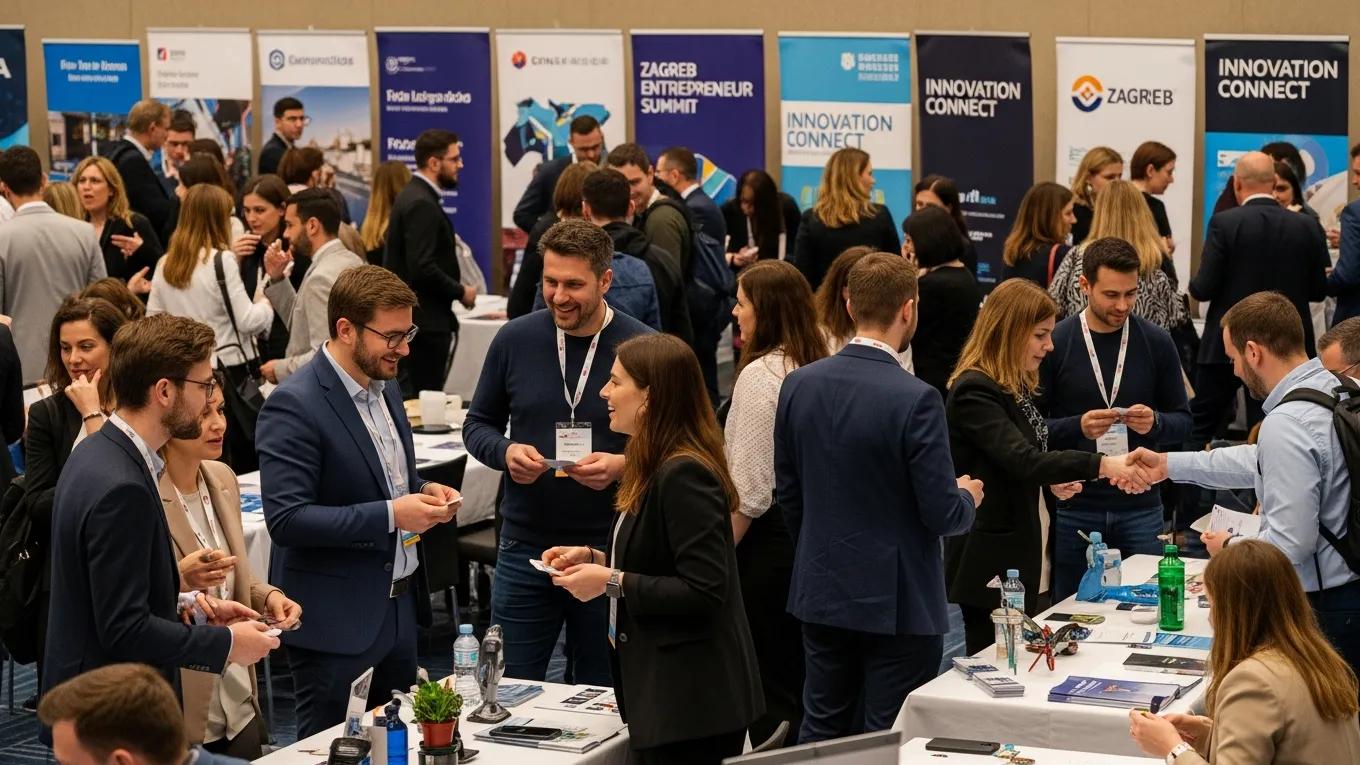
Step 9: Actively Build a Network of Contacts
A large number of new clients come through referrals.
Attend:
- startup events
- business conferences
- workshops
- meetup events
- coworking communities
Networking often brings more business opportunities than paid advertising.
Step 10: Manage Finances from Day One
Many small businesses fail due to poor money management, not due to a lack of clients.
Track:
- income
- expenses
- tax obligations
- profitability
Separate business and personal finances as soon as possible.
How Much Does It Really Cost to Start a Small Business in Croatia?
One of the most common questions new entrepreneurs ask is how much money is needed to start a business. Although costs depend on the industry, many service-based businesses can be started with relatively low initial capital.
Approximate startup costs may include:
- business registration (sole proprietorship or company)
- accounting services
- website development
- business address rental
- marketing activities
- business software
For freelance activities such as digital marketing, programming, or design, initial investments are often significantly lower than for retail, hospitality, or manufacturing businesses.
Before starting a business, it is recommended to prepare a cost estimate for the first 6 to 12 months of operation so that you have sufficient financial security during the development of the business.
Institutions That Can Help Entrepreneurs in Zagreb
Many new entrepreneurs are not aware of how much support exists at the local and national level.
Among the most important organizations are:
- HAMAG-BICRO
- Croatian Chamber of Economy (HGK)
- Croatian Chamber of Trades and Crafts (HOK)
- Blue Office of the City of Zagreb
- Zagreb Development Agency
- startup incubators and accelerators
These institutions offer education, consulting, mentorship, and information about available grants and support for entrepreneurs.
Grants and Non-Repayable Funding for Entrepreneurs
Beginners often look for financing options that do not involve taking on debt.
Possible options include:
- self-employment grants
- calls for proposals for business digitalization
- employment subsidies
- EU funds for small entrepreneurs
- programs for innovative startups
Timely monitoring of public calls can significantly reduce the initial costs of starting a business.
Example of Starting a Business with a Minimal Budget
Let’s imagine a freelance marketing agency operating from a coworking space.
Initial costs may include:
- laptop
- business domain and website
- coworking membership
- basic marketing tools
- accounting services
This model allows an entrepreneur to start a business without renting a traditional office, hiring additional staff, or making large infrastructure investments.
Many successful startups actually began their businesses in exactly this way.
Trends Shaping the Future of Small Businesses
Entrepreneurs starting businesses today need to follow several key trends:
- artificial intelligence and automation
- remote work
- online sales
- digital marketing
- subscription business models
- SaaS services
- personalization of user experience
Understanding these trends can help small business owners build a competitive advantage and increase long-term revenue.
Most Common Mistakes of New Entrepreneurs
Avoid the following:
- starting without market research
- excessively high initial costs
- hiring too early
- neglecting marketing
- lack of a financial plan
- trying to do everything alone
The most successful entrepreneurs continuously learn and adapt to the market.
Statistics and Trends Showing the Growth of Entrepreneurship in Zagreb and Croatia
Entrepreneurship in Croatia has been recording continuous growth in recent years, especially in the technology and service sectors. An increasing number of citizens are choosing to start their own businesses thanks to digitalization, more accessible remote work tools, and a growing startup ecosystem.
Some of the most important indicators include:
- More than 120,000 active craft businesses operate in Croatia, and their number has been continuously increasing in recent years.
- Zagreb is the country’s economic center and hosts the largest number of entrepreneurs, startups, and technology companies in Croatia.
- The IT sector is one of the fastest-growing branches of the Croatian economy and shows continuous growth in revenue and exports.
- An increasing number of entrepreneurs operate fully digitally without the need for traditional office space.
- Freelance and remote work models have significantly increased the number of individuals starting their own service-based businesses.
- The Croatian startup scene has been attracting more and more domestic and foreign investments in recent years, especially in the fields of artificial intelligence, SaaS solutions, fintech, and digital products.
According to European trends, small and medium-sized enterprises make up more than 99% of all businesses and represent one of the most important drivers of economic development, employment, and innovation. For this reason, the development of startups and small businesses plays a key role in strengthening the competitiveness of the local economy.
The growth of coworking spaces, startup incubators, and entrepreneurial communities further confirms that Zagreb is becoming an increasingly attractive environment for starting a business. Entrepreneurs today have access to significantly more educational opportunities, mentors, investors, and business contacts than just a few years ago, which greatly increases the chances of successfully developing new business projects.
How to Maintain a Work–Life Balance
Entrepreneurship can be demanding, especially during the first year.
To avoid burnout:
- set working hours
- schedule days off
- delegate tasks
- use automation tools
- separate time for family and hobbies
Long-term success requires a sustainable level of energy and motivation.
FAQ – Frequently Asked Questions
How much money is needed to start a small business in Zagreb?
It depends on the industry. Many service-based businesses can be started with a few hundred euros of initial investment.
Is it better to open a sole proprietorship or a j.d.o.o.?
It depends on the type of business, growth plans, and level of business risk.
Can I start a business while having a full-time job?
Yes. Many entrepreneurs start a business alongside employment to reduce financial risk.
How do I find my first clients?
Through referrals, networking, social media, LinkedIn, and a strong online presence.
Is it worth using a coworking space?
Yes. Coworking spaces provide a professional environment, lower costs, and access to an entrepreneurial community.